Sunday, March 2, 2014

Hooray for Small Farms!

Last weekend I attended Oregon's Small Farms Conference at Oregon State University in Corvallis.  This is an annual gathering of individuals and organizations that are a part of the small farms world in Oregon, including Extension staff, non-profit representatives, agricultural educators and students, farmers market managers, and of course farmers!  I had a great time learning new agricultural and marketing techniques, meeting new people, and seeing old friends.

Here’s a short sampling of what I saw at the conference:

Michael Ableman sharing photos from Foxglove Farm

Michael Ableman was the keynote speaker.  He is a farmer and author with a range of interesting experiences in the world of food and agriculture.  He shared a number of those stories with us.  His current project is called Sole Food, a program in Vancouver, BC that employs local adults to work on urban farms that were formerly vacant lots.  Michael also shared with us many beautiful photos from his Foxglove Farm on Salt Springs Island in BC, which also houses The Center for Arts, Ecology, and Agriculture.


The Small Farms Conference also doubles as the Oregon Farmers’ Market Association’s annual meeting.  I learned about some various farmers’ market projects in Oregon including the small Brownsville (population 1700) Farmers Market operated by the Calapooia Food Alliance and the Springfield Farmers’ Market which is housed with a commercial kitchen and business incubator program in the Sprout! Food Hub.  I also went to a talk that was focused on marketing to low-income and SNAP customers.

Lise Hubbe of SweetWell Farm

Walt Bernard of Ruby & Amber's Organic Oasis

Of course, the majority of the sessions were focused on agricultural techniques that can be used in small farms settings.  I learned about using work horses in a session taught by two farmers (Lise Hubbe of SweetWell Farm in Scio and Walt Bernard of Ruby & Amber’s Organic Oasis in Cottage Grove) who use draft animals in their farm operations.  This was fascinating!  Draft animals can be an excellent addition to a small farm, as long as the farmer is looking to create a strong relationship with another living being.  

Rogue Farm Corps 2013

Rogue Farm Corps was one of the many vendors at the conference.  I got to interact with RFC twice last week – both at the conference and in Portland at their Open House for farmers.  I was happy to see the turnout of Portland-area farmers who are interested in participating in RFC.  Staff members Stu and Megan are doing great work to grow the beginning farm and rancher movement.

Oregon State Extension's Small Farms Program has launched a new Center for Small Farms and Community Food Systems.  Its goal will be to not only support small farmers but healthy food systems as a whole.

The crocuses are blooming here in Portland :)

After this conference, I’m eager to get the garden going at home and volunteer with non-profits doing great community food systems work.

Monday, December 16, 2013

Help farmers and cows in Wayne County, Ohio


Those who know me personally are aware that Ohio has a special place in my heart.  It was in Ohio, while attending The College of Wooster, that my interest in food and agriculture developed.  Supporting small, sustainable, and diverse farms is now a central part of my life.  Sadly, it’s really tough to make a living in this type of business, despite the passion of the individuals involved.  BlueLoon Farm, operated by the Rocco family, is one such example- and they need your help to save some Jersey cows!  These cows are an important component of continuing to grow this farm business.  Watch this video to learn more, then consider supporting their Kickstarter campaign.  (Remember, Kickstarter campaigns are only funded if their fundraising goal is met.)

As a community we can support vital agricultural projects such as BlueLoon Farm.

Sunday, November 17, 2013

Selected photos from the season, in chronological order

If you've been reading my blog you've seen many of these photos, but it's nice to see them all in chronological order to get a feel for what the season looked like.

Until next time,
ET


Friday, November 15, 2013

Rogue Farm Corps is growing


Hello friends, 

Today I will post my final entries about my internship with Rogue Farm Corps!  You’ll get some updates on Rogue Farm Corps, my future plans, and some extra photos.


Rogue Farm Corps updates:

RFC throughout Oregon: RFC recently received grant funding to expand its programming to other parts of Oregon.  This coming season will be the first year for the Southern Willamette Farm Corps.  The Southern Willamette Valley (which includes the towns of Eugene and Springfield) is host to many sustainable farms and ranches, as well as many individuals interested in trying their hands at farming!  RFC also plans to expand its trainings to other parts of Oregon (Northern Willamette Valley and Central Oregon) in following seasons.

Continued training: Next year RFC will also be launching its FarmsNOW internship.  (I completed the FarmsNext program, which a season-long immersion for people with little agricultural experience.)  FarmsNOW will be a two-year commitment for people with at least two years of farm experience.  It will focus on building the planning, business, and management skills needed for running a diversified vegetable operation.

Interested in the program?  Applications are now available for the 2014 season.  You can read more about the programs on RFC’s website and get other updates on their facebook page.


Personal reflections:

The value of an immersive internship: I went into the internship thinking I may want to be a farmer.  I learned pretty quickly that I don’t want to be a commercial farmer, at least in the traditional sense.  However, it’s not like I’ve left the farm and will never use the knowledge I gained.  As cliché as it sounds, I really did learn a lot this summer.  One of the benefits of a program like RFC is that it is truly an immersive experience, exposing the intern to all aspects of work and life on a farm.  

Back in Portland: Even though I am back at home, I am using what I learned during my RFC experience every day.  I am even pickier about which farms I buy my food from at the farmers market.  I like seeking out the smaller farms that may not come to the larger markets in the city.  I’m thinking about what plants I want to grow in the garden next year that will fit the Portland climate, can be easily managed, and that taste good.  I try to give our backyard chickens happy lives so they can make good eggs.  Lastly, I am trying to be an advocate for sustainable farmers and food by following what is going on in the political system and by supporting local non-profits, NGOs, and social enterprises.

What’s next? I have a lot of unknowns for what I’m going to be doing next.  I have the privilege of having many options and opportunities.  When my next adventure begins, I hope to write blog updates.  Thanks as always for stopping by to learn and see what I’ve been doing!

Wednesday, October 23, 2013

Food Justice 2.0


 Now that I’m done with my farm internship, I see myself fitting into the food system through social justice work.  Last week I was fortunate enough to attend Multnomah County’s Food Justice Summit here in Portland.  Last year, I attended the summit through my internship with Adelante Mujeres.  I found it useful to learn about the local food and agricultural movement and thought this year’s focus on food justice would be especially pertinent for me.

LaDonna Redmond, a well-known food activist from Chicago, was this year’s keynote speaker.  She talked about her entry into what is now called “food justice” when she couldn’t find the food she needed to feed her son (who has a variety of food allergies) in her community.  That initial concern for her son’s health led her to start urban gardens on vacant lots in Chicago, where youth and adults could learn and work.  She now speaks around the country about her experiences to combat the industrial food system.  In her talk, she emphasized how important it is to not just talk about food.  Food justice is about introducing the lenses of race, class, and gender and using food as a means to achieve justice.  She says that we need to talk about the histories and narratives of people of color, about Historical Trauma, and about facilitating healing rather than just health.  This is food justice 2.0.

You can see a shorter version of the talk she gave at the summit here (from her appearance at TedX Manhattan last year):


Here are some of the projects and organizations who discussed their work in sessions I attended:
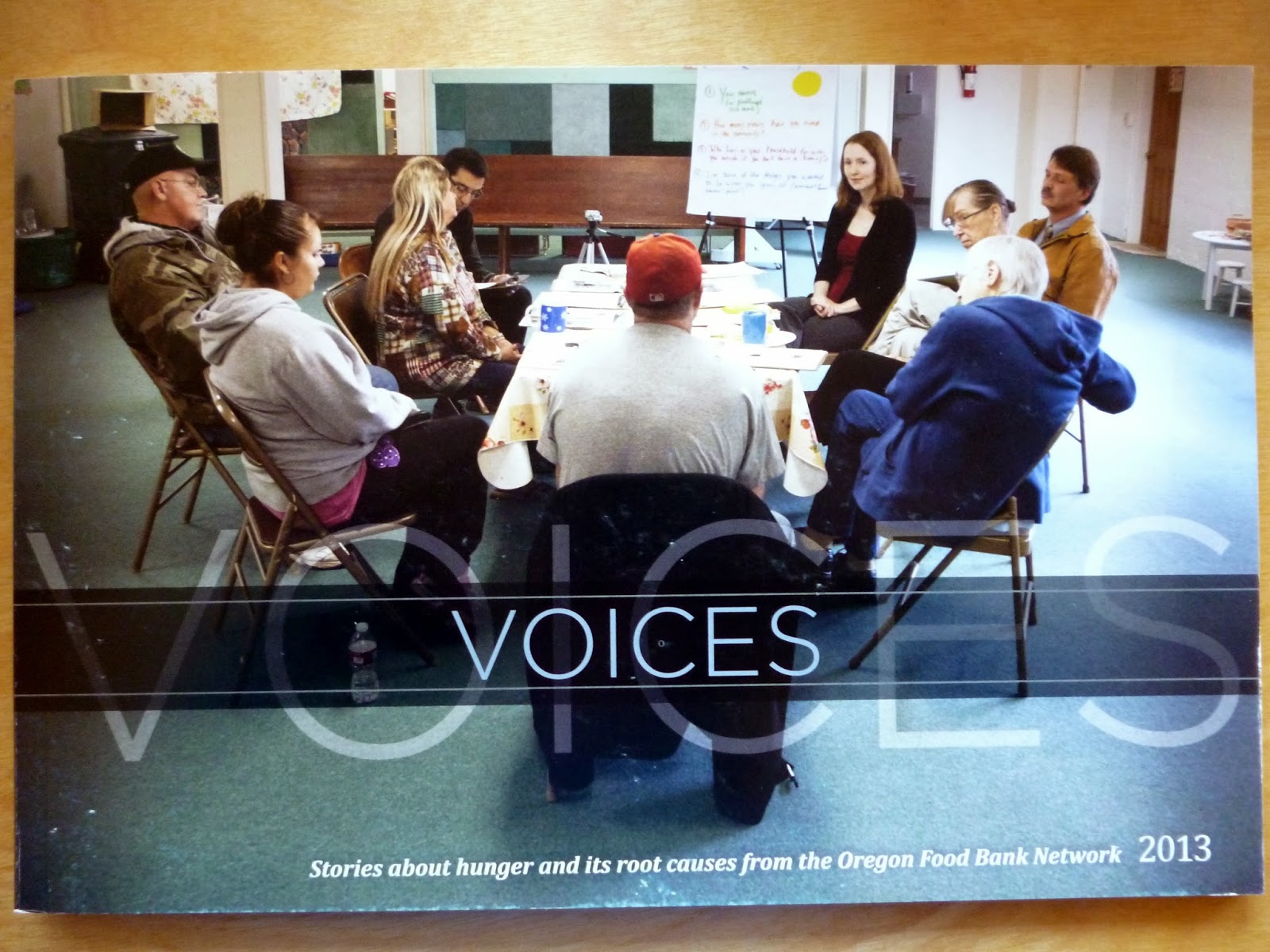
  • The Oregon Food Bank’s Voices project is a division of OFB’s advocacy branch.  Voices is all about storytelling, allowing individuals who visit food pantries and free meal sites to tell their own stories about their situations and about hunger.  These stories are used to help distill myths about hunger- that people who receive emergency food boxes are lazy, make bad choices, and are taking advantage of the system.  The stories collected show that food pantry recipients are generous (often going hungry in order to care for others), come from a variety of ages and backgrounds, and that getting out of poverty through personal choices is unrealistic.  These individuals want the best food for their families, but what they’re making in income and receiving through SNAP is not enough.  
 

  • A few different projects are happening in Oregon’s jails and prisons to provide inmates with access to gardening.  Multnomah County’s Sustainable Jails Project has a garden at their Inverness Jail (in North Portland) which grows food for the food bank.  They also have a condensed (inmates at the jail typically have very short stays) version of Seed-to-Supper, a basic gardening course coordinated by Oregon Food Bank.  Multnomah County also has gardening and culinary arts training programs in their juvenile system for youth on probation.  These programs have an internship component where youth can learn job skills and make some money.  Lastly, the Lettuce Grow Garden Foundation has helped establish gardens and provide inmate access to OSU’s Master Gardener course and the Seed-to-Supper course in all of Oregon’s state prisons.  
 

  • Partners for a Hunger Free Oregon is an advocacy and outreach organization based in Portland that works to end hunger before it begins.  They helped write a statewide action plan to end hunger by increasing economic stability, cultivate a strong regional food system, and improve the food assistance safety net.  They also lobby for important economic and food welfare programs.
 

I appreciated many speakers’ emphasis that food insecurity was a symptom of larger societal problems.  Food justice doesn’t happen just by giving people a box of food or starting up a grocery store in the neighborhood.  Everyone needs living wages, adequate safety nets, access to their type of food, and an outlet to facilitate healing from past and present injustices.

Monday, October 21, 2013

Farm Classes & Tours Part 3


harvesting broomcorn during last day of work

Hi friends,

Thanks for reading my blog.  I’ve completed my internship with RFC but I still have a couple more entries I’d like to post about the experience, the first of which is this one about the remainder of the farm classes that I attended.

Running a Small Farm Business
Maud Powell (who you may remember as Siskiyou Sustainable Cooperative co-coordinator) gave us many tips on starting a small farm business.  Beginning small farmers face many challenges, including access to land, access to capital, and managing labor needs with a personal life.  There are a lot of important tools a farmer (like any businessperson) can use to help plan and track their business: a business plan, cash flow statement, income statement, and enterprise budgets are some examples we learned about.  In this class we also learned about good local food marketing from staff of Thrive (an organization that promotes local food in the area) and Rogue Valley Farm-to-School.

a book that excites RFC interns


Food & Farm Movement
Our last potluck of the season was about the food and farm movement, and more specifically about legislation on local, state, and national levels that support small and beginning farmers.  We learned about the Agricultural Reclamation Act, which was coordinated by Friends of Family Farmers to support family farms throughout the state of Oregon.  It includes a plan for policy that will support small family farms and their communities.  We also discussed legislation about genetically modified crops and foods, from Jackson County’s GMO crop ban that is on the May 2014 ballot, to Oregon’s bill that requires decisions about seeds to be made on a statewide level (known as the state's Monsanto Protection Act), to Washington State’s I-522 campaign to label genetically engineered foods.

Promoting family farming in Oregon!


an infographic about GMO labeling (click to enlarge)

Seeds @ Dancing Bear Farm
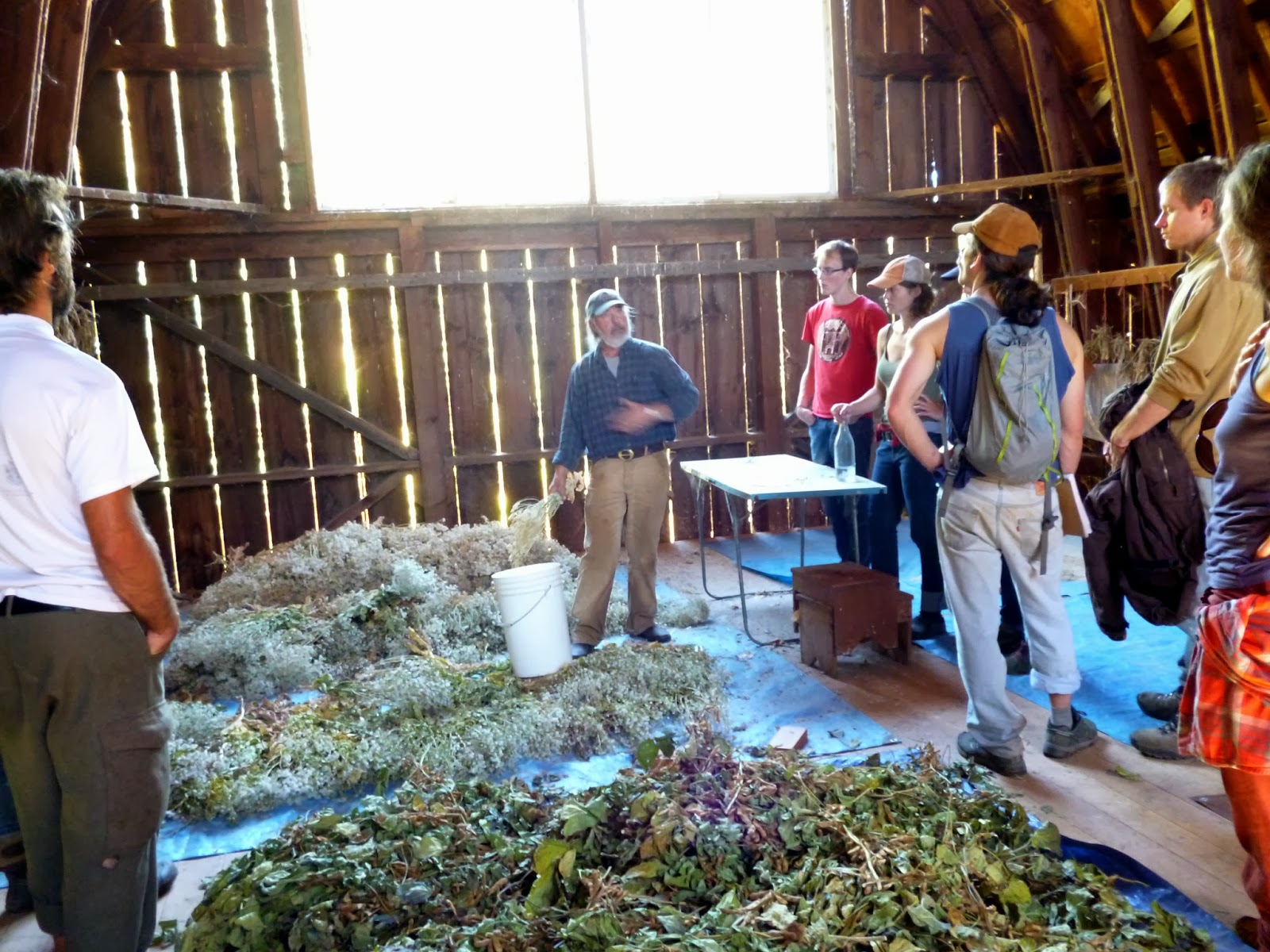
I had the internship-equivalent of this 3 hour class.  Steve discussed some of the things to think about when growing seed crops and everyone got to try their hand at cleaning corn and lettuce seed.  Since I’ve already written a number of posts about seeds (such as this one and this one), I won’t go into much detail here.  

Steve demonstrates tomato seed cleaning

Steve demonstrates lettuce seed cleaning