Sunday, November 17, 2013
Friday, November 15, 2013
Rogue Farm Corps is growing
Hello friends,
Today I will post my final entries about my internship with
Rogue Farm Corps! You’ll get some
updates on Rogue Farm Corps, my future plans, and some extra photos.
Rogue Farm Corps
updates:
RFC throughout Oregon:
RFC recently received grant funding to expand its programming to other parts of
Oregon. This coming season will be the
first year for the Southern Willamette Farm Corps. The Southern Willamette Valley (which
includes the towns of Eugene and Springfield) is host to many sustainable farms
and ranches, as well as many individuals interested in trying their hands at
farming! RFC also plans to expand its
trainings to other parts of Oregon (Northern Willamette Valley and Central
Oregon) in following seasons.
Continued training:
Next year RFC will also be launching its FarmsNOW internship. (I completed the FarmsNext program, which a
season-long immersion for people with little agricultural experience.) FarmsNOW will be a two-year commitment for
people with at least two years of farm experience. It will focus on building the planning,
business, and management skills needed for running a diversified vegetable
operation.
Interested in the
program? Applications are now available
for the 2014 season. You can read more
about the programs on RFC’s website and get other updates on their facebook page.
Personal
reflections:
The value of an
immersive internship: I went into the internship thinking I may want to be
a farmer. I learned pretty quickly that
I don’t want to be a commercial farmer, at least in the traditional sense. However, it’s not like I’ve left the farm and
will never use the knowledge I gained. As
cliché as it sounds, I really did learn a
lot this summer. One of the benefits
of a program like RFC is that it is truly an immersive experience, exposing the
intern to all aspects of work and life on a farm.
Back in Portland:
Even though I am back at home, I am using what I learned during my RFC
experience every day. I am even pickier
about which farms I buy my food from at the farmers market. I like seeking out the smaller farms that may
not come to the larger markets in the city.
I’m thinking about what plants I want to grow in the garden next year
that will fit the Portland climate, can be easily managed, and that taste good. I try to give our backyard chickens happy
lives so they can make good eggs.
Lastly, I am trying to be an advocate for sustainable farmers and food
by following what is going on in the political system and by supporting local
non-profits, NGOs, and social enterprises.
What’s next? I
have a lot of unknowns for what I’m going to be doing next. I have the privilege of having many options
and opportunities. When my next
adventure begins, I hope to write blog updates.
Thanks as always for stopping by to learn and see what I’ve been doing!
Wednesday, October 23, 2013
Food Justice 2.0
Now that I’m done with my farm internship, I see myself
fitting into the food system through social justice work. Last week I was fortunate enough to attend
Multnomah County’s Food Justice Summit here in Portland. Last year, I attended the summit through
my internship with Adelante Mujeres. I
found it useful to learn about the local food and agricultural movement and
thought this year’s focus on food justice
would be especially pertinent for me.
LaDonna Redmond, a well-known food activist from Chicago,
was this year’s keynote speaker. She
talked about her entry into what is now called “food justice” when she couldn’t
find the food she needed to feed her son (who has a variety of food allergies)
in her community. That initial concern
for her son’s health led her to start urban gardens on vacant lots in Chicago,
where youth and adults could learn and work.
She now speaks around the country about her experiences to combat the
industrial food system. In her talk, she
emphasized how important it is to not just talk about food. Food justice is about introducing the lenses
of race, class, and gender and using food as a means to achieve justice. She says that we need to talk about the
histories and narratives of people of color, about Historical Trauma, and about
facilitating healing rather than just health.
This is food justice 2.0.
You can see a shorter version of the talk she gave at the
summit here (from her appearance at TedX Manhattan last year):
Here are some of the projects and organizations who
discussed their work in sessions I attended:
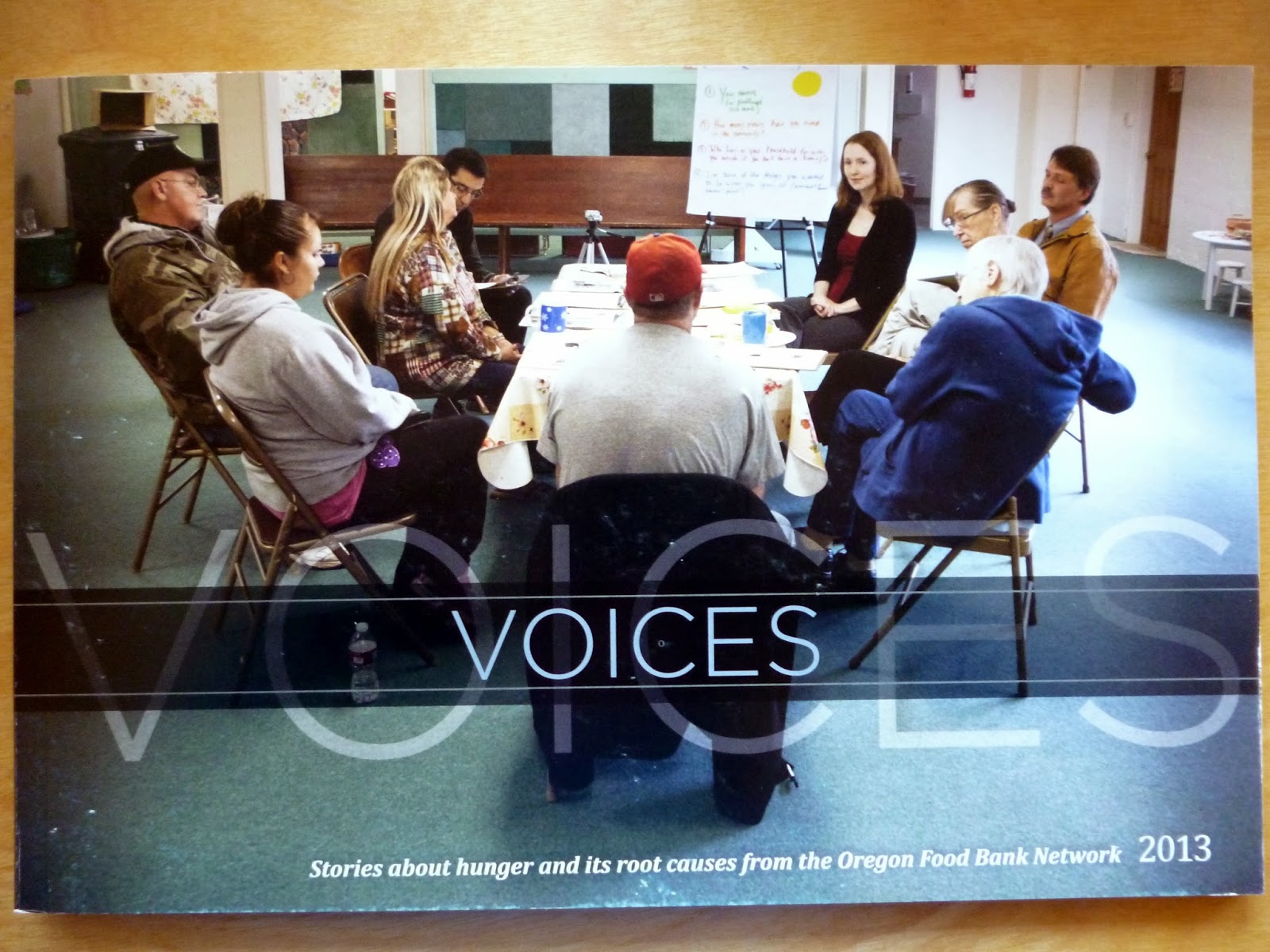
- The Oregon Food Bank’s Voices project is a division of OFB’s advocacy branch. Voices is all about storytelling, allowing individuals who visit food pantries and free meal sites to tell their own stories about their situations and about hunger. These stories are used to help distill myths about hunger- that people who receive emergency food boxes are lazy, make bad choices, and are taking advantage of the system. The stories collected show that food pantry recipients are generous (often going hungry in order to care for others), come from a variety of ages and backgrounds, and that getting out of poverty through personal choices is unrealistic. These individuals want the best food for their families, but what they’re making in income and receiving through SNAP is not enough.
- A few different projects are happening in Oregon’s jails and prisons to provide inmates with access to gardening. Multnomah County’s Sustainable Jails Project has a garden at their Inverness Jail (in North Portland) which grows food for the food bank. They also have a condensed (inmates at the jail typically have very short stays) version of Seed-to-Supper, a basic gardening course coordinated by Oregon Food Bank. Multnomah County also has gardening and culinary arts training programs in their juvenile system for youth on probation. These programs have an internship component where youth can learn job skills and make some money. Lastly, the Lettuce Grow Garden Foundation has helped establish gardens and provide inmate access to OSU’s Master Gardener course and the Seed-to-Supper course in all of Oregon’s state prisons.
- Partners for a Hunger Free Oregon is an advocacy and outreach organization based in Portland that works to end hunger before it begins. They helped write a statewide action plan to end hunger by increasing economic stability, cultivate a strong regional food system, and improve the food assistance safety net. They also lobby for important economic and food welfare programs.
I appreciated many speakers’ emphasis that food insecurity
was a symptom of larger societal problems.
Food justice doesn’t happen just by giving people a box of food or
starting up a grocery store in the neighborhood. Everyone needs living wages, adequate safety
nets, access to their type of food, and an outlet to facilitate healing from
past and present injustices.
Monday, October 21, 2013
Farm Classes & Tours Part 3
| harvesting broomcorn during last day of work |
Hi friends,
Thanks for reading my blog.
I’ve completed my internship with RFC but I still have a couple more
entries I’d like to post about the experience, the first of which is this one
about the remainder of the farm classes that I attended.
Running a Small Farm
Business
Maud Powell (who you may remember as Siskiyou Sustainable Cooperative co-coordinator) gave us many tips on starting a small farm
business. Beginning small farmers face
many challenges, including access to land, access to capital, and managing
labor needs with a personal life. There
are a lot of important tools a farmer (like any businessperson) can use to help
plan and track their business: a business plan, cash flow statement, income
statement, and enterprise budgets are some examples we learned about. In this class we also learned about good
local food marketing from staff of Thrive (an organization that promotes local
food in the area) and Rogue Valley Farm-to-School.
![]() |
| a book that excites RFC interns |
Food & Farm
Movement
Our last potluck of the season was about the food and farm
movement, and more specifically about legislation on local, state, and national
levels that support small and beginning farmers. We learned about the Agricultural Reclamation Act, which was coordinated by Friends of Family Farmers to support family farms
throughout the state of Oregon. It
includes a plan for policy that will support small family farms and their
communities. We also discussed
legislation about genetically modified crops and foods, from Jackson County’s GMO crop ban that is on the May 2014 ballot, to Oregon’s bill that requires
decisions about seeds to be made on a statewide level (known as the state's Monsanto Protection Act), to Washington State’s
I-522 campaign to label genetically engineered foods.
![]() |
| Promoting family farming in Oregon! |
![]() |
| an infographic about GMO labeling (click to enlarge) |
Seeds @ Dancing Bear
Farm
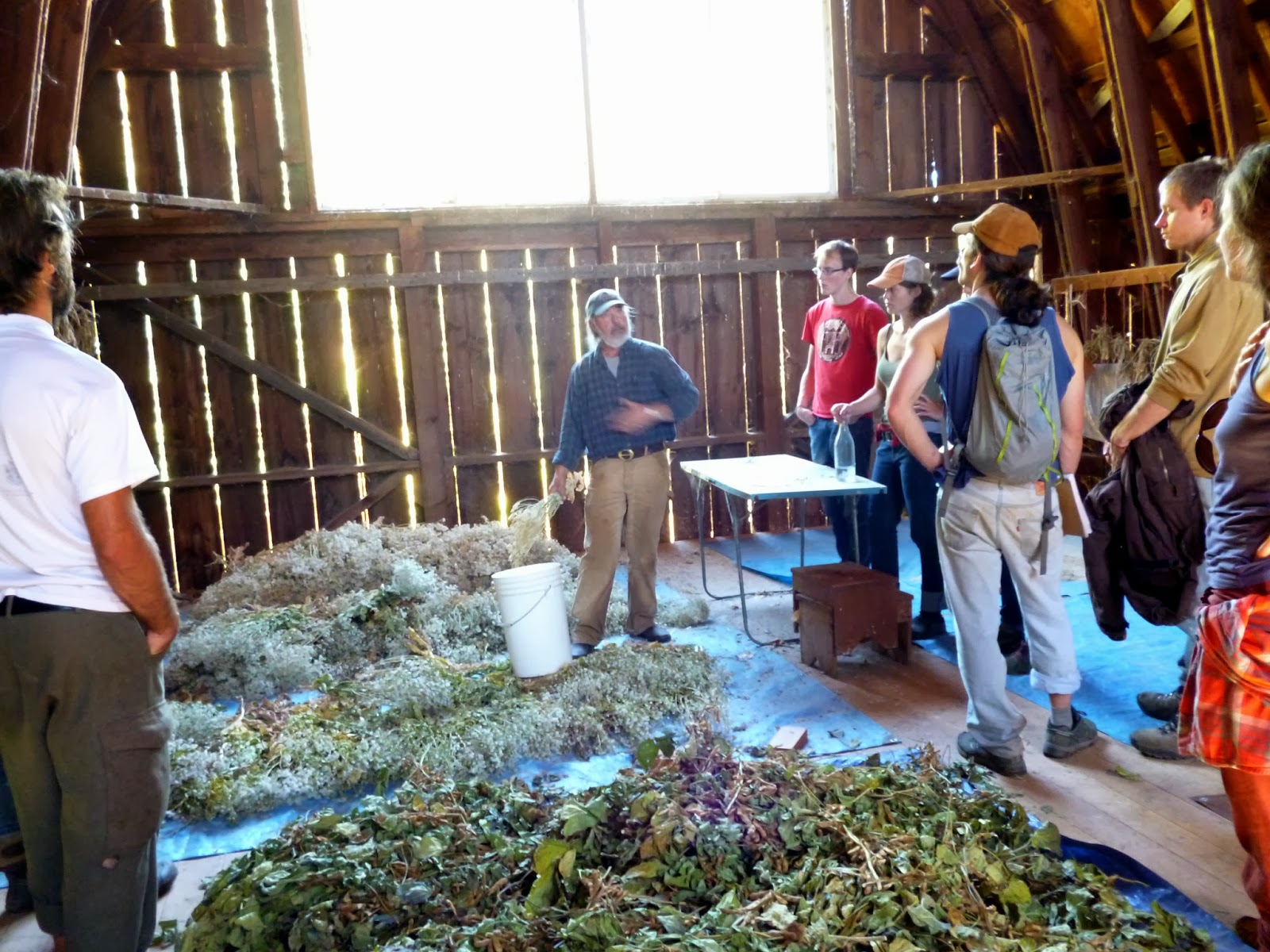
I had the internship-equivalent of this 3 hour class. Steve discussed some of the things to think
about when growing seed crops and everyone got to try their hand at cleaning
corn and lettuce seed. Since I’ve
already written a number of posts about seeds (such as this one and this one), I won’t go into much detail
here.
| Steve demonstrates tomato seed cleaning |
| Steve demonstrates lettuce seed cleaning |
Thursday, October 10, 2013
Food access, hunger, & squash
If you read my blog you probably know that food access is an interest of mine. I am frustrated when I see how much good food gets wasted (even on a small organic farm) because it was harvested and packed but never purchased or donated. Yes, the unsold food could become good compost, but that’s really labor-intensive compost! There are plenty of people who would eat that food if they could get their hands on it. When I imagine this sort of problem magnified on a national or international level, I sometimes feel overwhelmed.
Many people I know think hunger exists because there is not enough food
being grown, but that explanation is flawed.
The food is out there. Hunger is a problem of broken economic and food systems: the richest get
richer at the expense of everyone else.
Everyone else must now try harder than ever to make ends meet. At the same time, while the distribution of
sustainably grown produce is still expanding, the processed food industry has
already infiltrated grocery stores, corner markets, and food pantries with its
cheap and addicting products.
Yes, this is a bit of a downer.
But things that are broken can be built up again, and in the meantime we
can build safety nets.
~~~~~~~~~~
I felt like I needed to mention the food access piece again
because while I definitely have frustrations about how to connect the good food to
the eater, I was able to provide some much-needed good meals when we took some
of DBF’s squash to the Gospel Rescue Mission (a local shelter and meal center)
and Josephine County Food Bank.
Steve has been bringing his winter squash to the Mission’s kitchen for a
few years now because he sees it as an “everybody wins” situation. He drives a truckload of squash into
town. At the Mission’s kitchen, volunteers (many of whom
are current shelter residents) clean and chop the squash. More volunteers scoop the seeds into 5 gallon
buckets and finally another set of volunteers packages the remaining squash
meat into bags and boxes. The Mission and food bank get
to keep the ready-to-cook squash, which will provide thousands of meals both immediately
and throughout the year to those who need it. Steve takes home the buckets of seeds (a very
important seed crop for his business) and gets a tax deduction for his squash
donation. What would take days with a
few people on the farm happens in a few hours, with the added bonus of
connecting more good food to more eaters.
Remember those North Georgia candy roaster squash photos? Last week
we took a full truckload of those to the Mission:
We used a full team to get the job done:
| washing station |
![]() |
| chop chop |
| scooping & packing |
| squash ready for the food pantry |
| a full truck |
Then we took the seeds back to the farm:
| seeds fermenting in big buckets |
| a top-down view |
| cleaned seeds drying on racks |
This project will continue with our 6000 pounds of delicata squash...
Monday, September 30, 2013
Another reason to save seeds
| heirloom broomcorn seed from Dancing Bear Farm |
The seed industry, like so much of our economic system, has become increasingly consolidated and controlled by corporations. Dr. Phil Howard, a Professor at Michigan State who is known in the food systems world for his infographics, has released a new image showing this consolidation:
![]() |
| (click on image to enlarge) |
Small-scale, open-pollinated, organic seed growers can be important activists in resistance to this consolidation because they often sell to independent heirloom seed companies and are preserving unique varieties that larger corporations care little about. Thanks seed savers!
Monday, September 23, 2013
Subscribe to:
Posts (Atom)